
Insights on how to get enough protein from plant foods
Not all proteins are equal

As you know from the previous newsletter, I am currently going through a 2-week vegan challenge.
This is my second attempt, years after a disastrous first experiment that left me with the conviction it’s not possible to thrive eating only plant foods.
This time, I am using biohacking knowledge I have gathered since then to optimise my nutrients absorption and hopefully feel great physically and mentally.
Last week, we talked about how plants have defence mechanisms preventing you from getting all the nutrients in them, and how you can deactivate these mechanisms with soaking and sprouting.
This week, we will talk about one form of nutrient in particular: proteins.
Since I am always doing some form of physical activity or sport, getting enough protein is important for me to fuel my muscles and make sure I recover until the next session.
At the moment I am regularly doing Calisthenics and Brazilian Jiu Jitsu, which are both very demanding on your muscles.
Even though going vegan requires removing some of the most protein-rich foods available (eggs, meat, dairy), in theory it is still possible to get enough protein from them. In practice, the devil is in the details and 1g of protein from beef is not equal to 1g of protein from chickpeas.
Indeed, we will see how most plant-based proteins are “incomplete” while most animal-based proteins are “complete”, and why this is important for your health and wellbeing.
Fortunately, we will show you can get “complete” proteins from plant foods by properly combining them.
Cheers,
Auguste
Essential vs non-essential amino acids
Proteins are made out of amino acids. Basically, amino acids are like lego blocks constituting proteins when put together.
Different proteins are composed of different amino acids in different proportions.
Our body needs 20 amino acids to function properly.
Nine of them are called “essential amino acids” because your body can’t make them. You can only get them from food and supplements.
The other amino acids are “non-essential” since they can be created by the body.
A deficiency in amino acids can lead to:
decreased immunity
digestive problems
depression
fertility issues
lower mental alertness
muscle loss
reduced healing and repair of tissues
etc.
As often, a deficiency does not occur overnight. It is usually gradual. If you decide to change your diet in a way that reduces the quality and quantity of EAAs (essential amino acids) that you ingest, it might take weeks or months before you start experiencing the effects of deficiencies. You might not even be able to connect the dots, or worse you might consider the situation to be the normal process of aging.
Sources:
https://my.clevelandclinic.org/health/articles/22243-amino-acids
https://www.healthline.com/nutrition/essential-amino-acids
https://www.medicalnewstoday.com/articles/324229
https://www.fitveganguide.com/complete-protein-combinations-chart/
Complete vs incomplete proteins
A protein is complete if it contains the 9 essential amino acids. Otherwise it is incomplete.
Most of the proteins from animal-based foods are complete: meat, poultry, fish, eggs, and dairy products.
Plant-based foods with complete proteins (as far as I know) are: quinoa, buckwheat, soy, hemp seeds, chia seeds, spirulina, amaranth. As you can see there aren’t that many options.
Besides, one cup of cooked quinoa provides 8g of protein while a portion of 118g of chicken breast provides 27g of protein. You would have to eat 3 cups of cooked quinoa to get the amount of protein from that chicken breast. That doesn’t sound like the best culinary experience…
Let’s not forget proteins from plant foods are less bioavailable (harder to be absorbed by the body) because of the numerous defence mechanisms meant to protect the plant. So you might actually need 4 cups of cooked quinoa. Bon appétit!
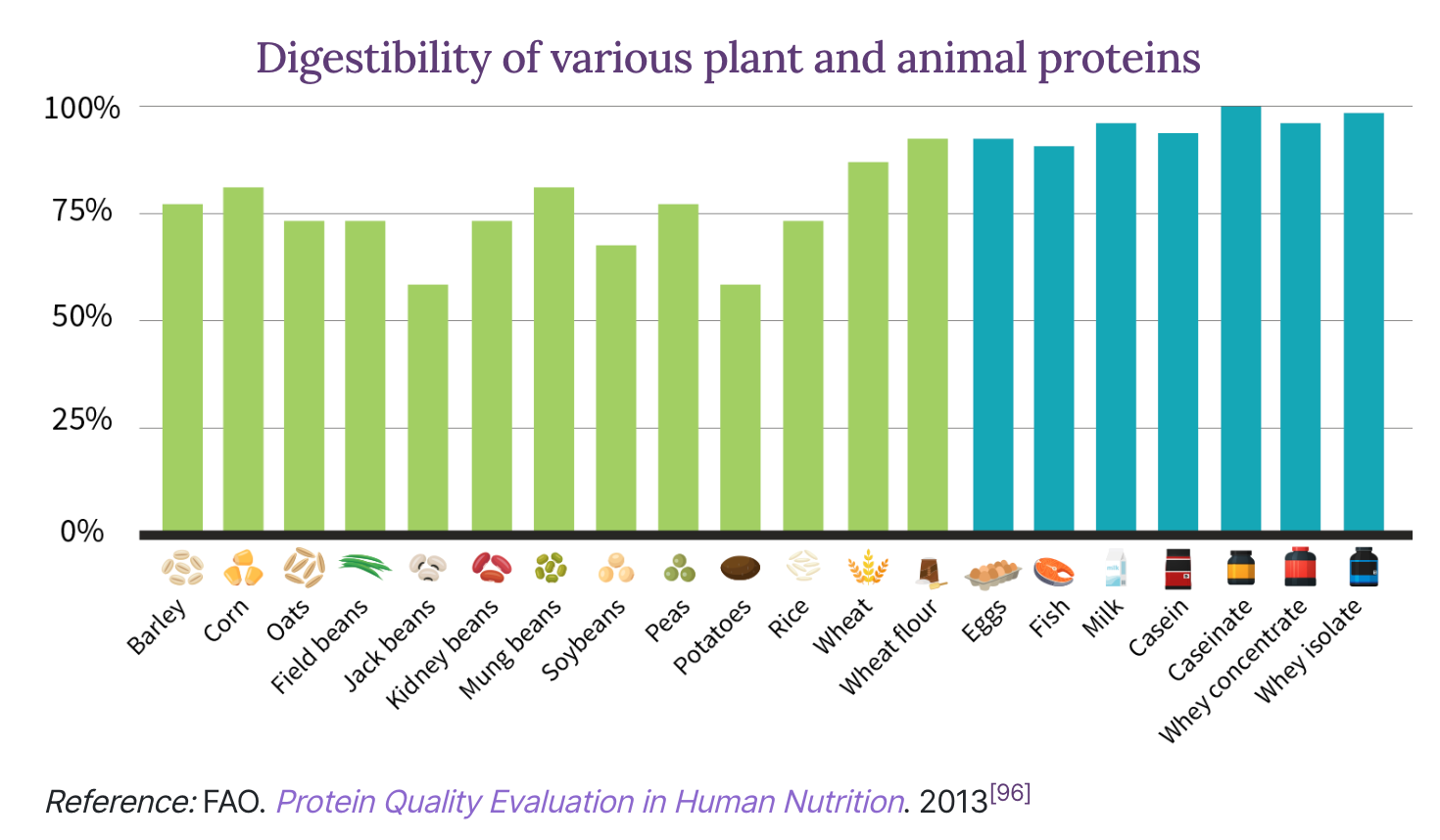
However, if you are being smart about it, you can mitigate all these issues if you have decided to cut out animal-derived foods from your diet.
First, the bioavailability issue was covered in the previous netter.
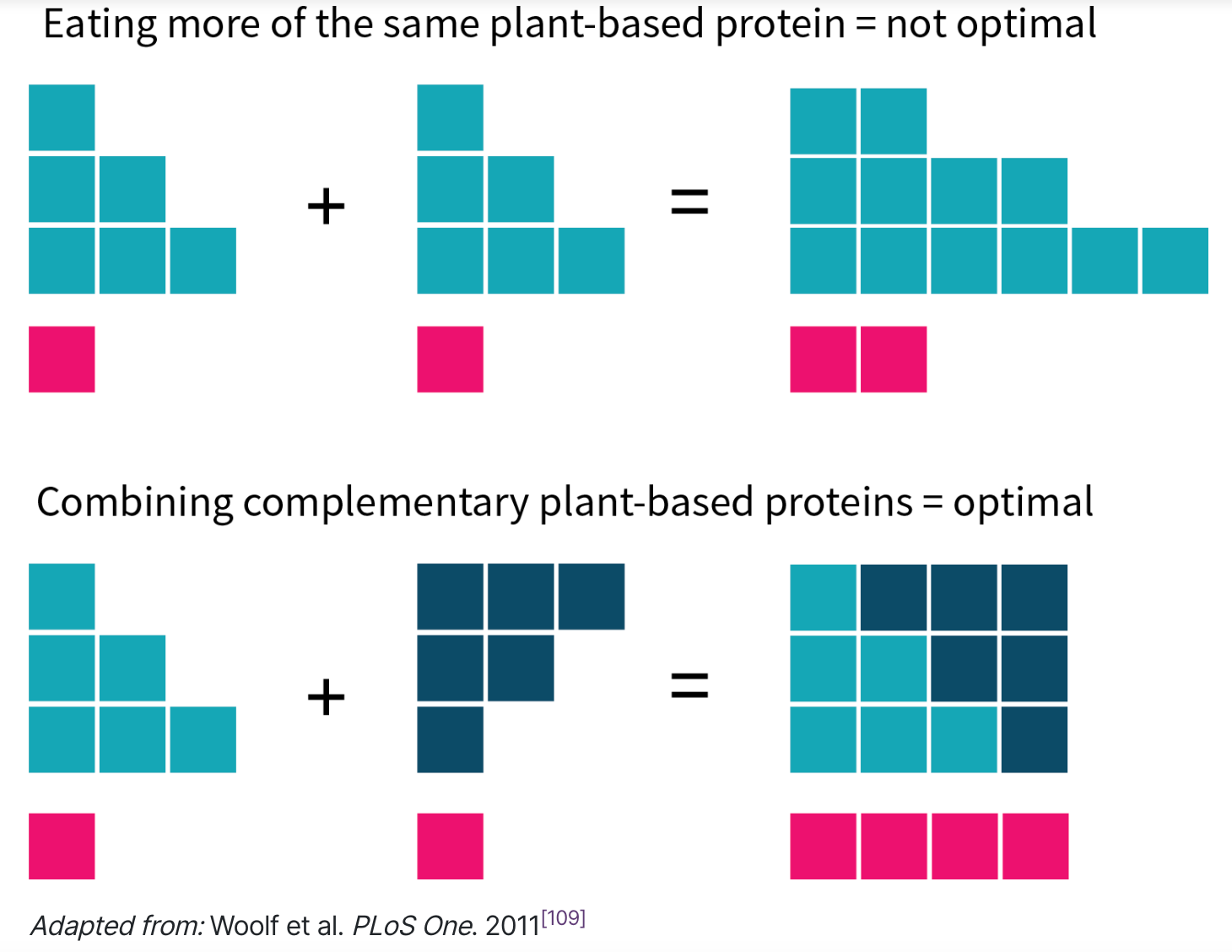
Then, you can get complete proteins by combining incomplete proteins together in a complementary way. We will explain how you can do this in practice at the end of the newsletter 🤗
Sources:
https://www.fitveganguide.com/complete-protein-combinations-chart/
https://www.medicalnewstoday.com/articles/274745
https://www.webmd.com/diet/health-benefits-chicken
How much protein do you need?
Protein needs are highly individual. They mostly depend on your weight, goal and level of physical activity.
It can go from 1.2-1.8 g/kg to 3.3 g/kg depending on whether you are sedentary and want to maintain weight, or physically active and want to build muscle.
If you want to know for yourself, here is a science-based protein intake calculator from Examine (the reference website for analysing and summarising the latest scientific research to help you be healthier):
https://examine.com/protein-intake-calculator/
Sources:
How you can start
At this stage you are probably wondering how you can use this knowledge in practice.
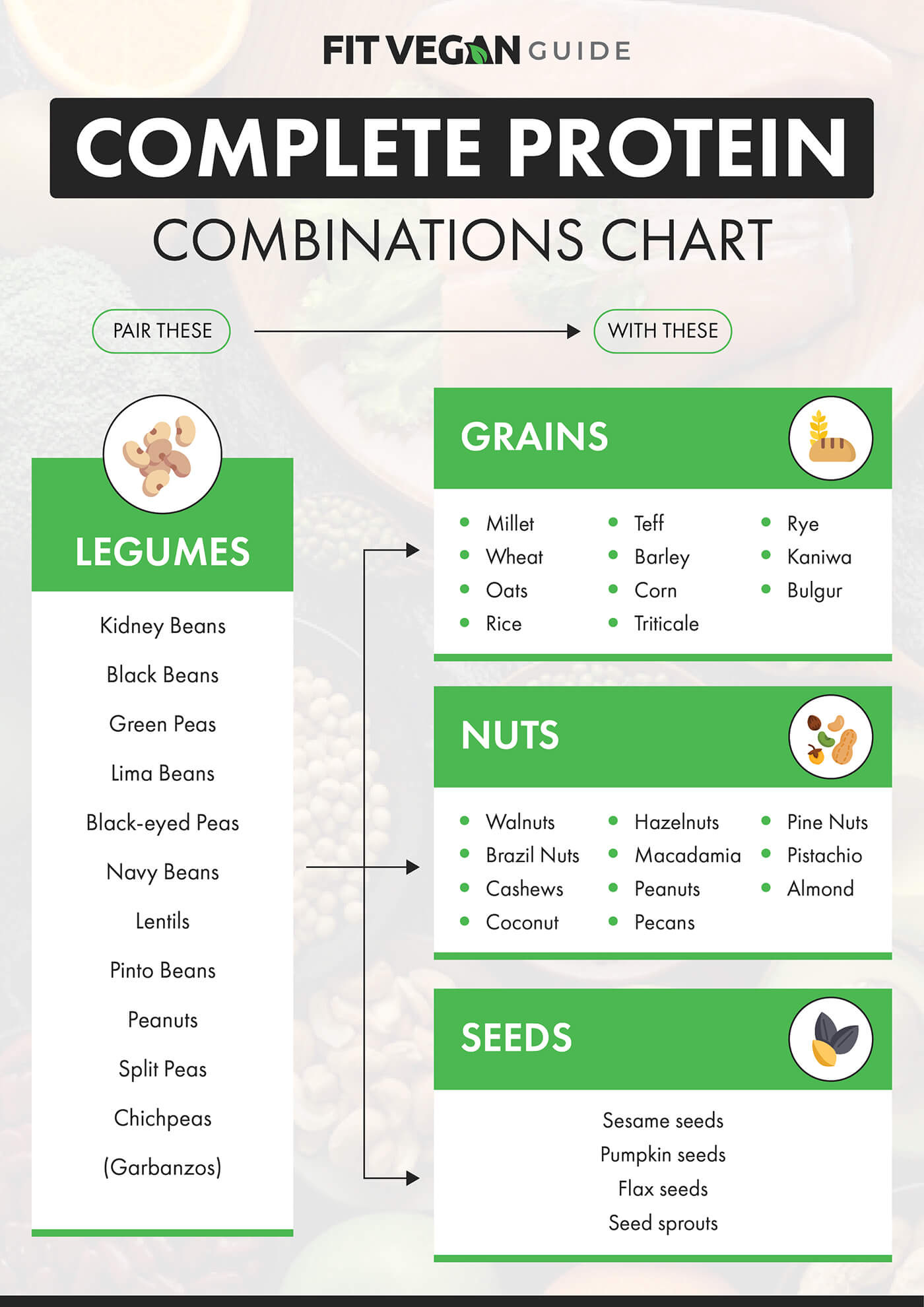
I found the following guide to be extremely helpful in making all these insights actionable: https://www.fitveganguide.com/complete-protein-combinations-chart/
Basically, getting complete proteins from a plant-based diet boils down to a simple rule of thumb: pick a legume and pair it with either grains, nuts and seeds.
Of course, you should first use the knowledge from the previous newsletter to properly prepare the legumes, grains, nuts and seeds with soaking and sprouting to make these proteins more bioavailable.
In conclusion, adopting a plant-based diet doesn't mean compromising on complete proteins.
If you found this informative, don’t hesitate to like and share.
Also, if you have any suggestions for tasty plant-based recipes providing complete proteins, please do share in the comment section! I still have a week to go on the challenge and I am currently running out of ideas 😅
Quote of the week
Health is a state of complete harmony of the body, mind and spirit. When one is free from physical disabilities and mental distractions, the gates of the soul open.
B.K.S. Iyengar